WNBA style evolution reflects shifts in gender, identity and visibility
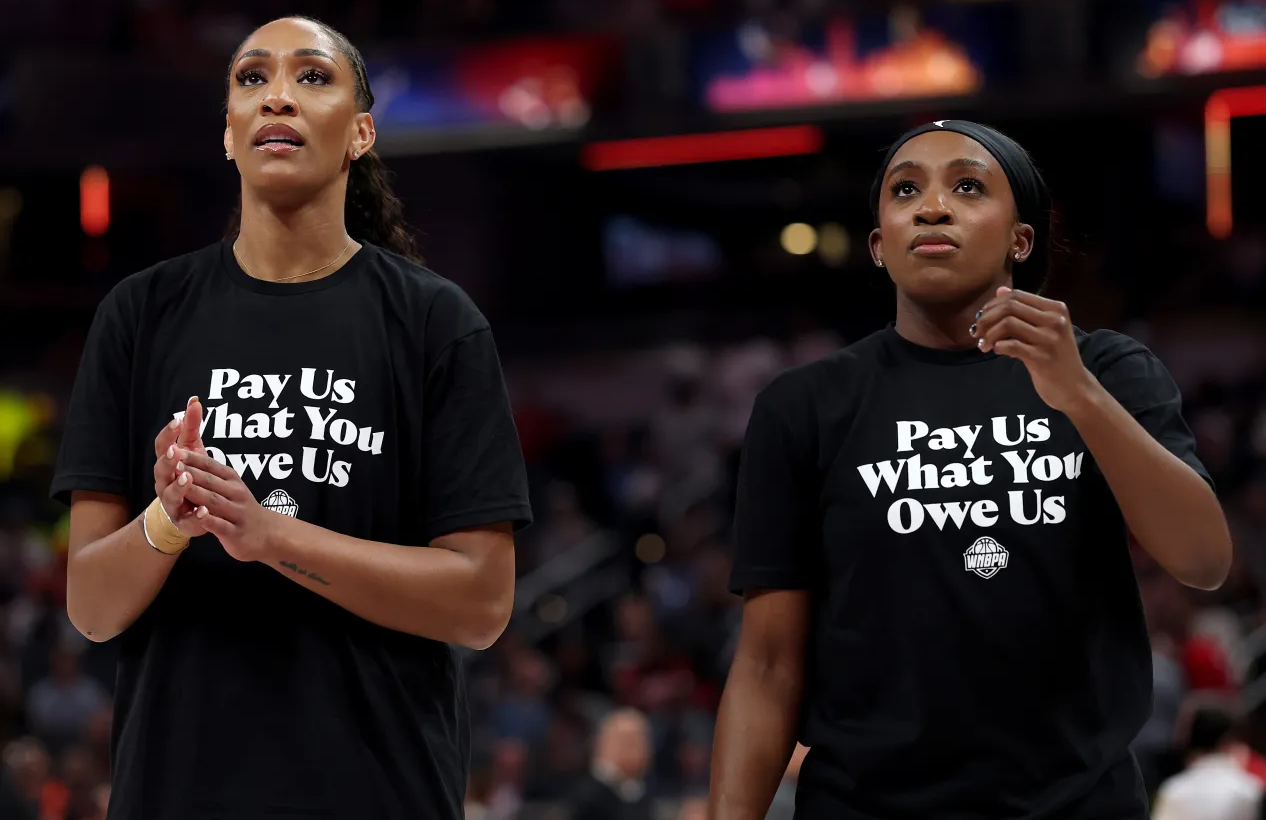
A'ja Wilson and Jackie Young at the 2025 WNBA All-star Game in Indianapolis, Ind. in 2025. (Steph Chambers // Getty Images)
July 19, 2025 — Las Vegas Aces A’ja Wilson and Jackie Young went viral wearing t-shirts reading ‘Pay us what you owe us’ at the WNBA All-Star game in Indianapolis.
Known for her love for Louis Vuitton, Wilson is no stranger to fashion statements. But this look in particular highlights a growing space in society where WNBA athletes are not just players but cultural influencers.
Fashion in the WNBA has come a long way since the league’s first game in June of 1997. What began with colorful oversized jerseys has evolved into a powerful form of self-expression.
“We did enough things different to make sure that they had their own identities, but they were still coming into the established NBA,” said Tom O’Grady, first creative director for the NBA.
The WNBA’s first jerseys and team names were created to be complementary to the NBA teams in their same cities.
Today, what the players wear on and off the court displays identity, challenges social norms and helps reshape how women in sports are viewed.
The tunnel walk, once a routine entrance, has become the league’s unofficial runway. Players like Wilson, DiDi Richards and Angel Reese often get attention for bold outfits blending high fashion with streetwear. Designers are taking notice, and several athletes have deals and collabs with major brands like Puma and Nike.
For these players, fashion isn’t just about the aesthetics, it’s about controlling the narrative.
“There are so many situations where young women need to compromise. I think it is the most powerful and radical thing in the world to see someone be that exceptional on the court and then be able to go out and also be a hot girl. It’s something that could have only been achieved by young women of color,” said Kirsten Chen, a writer for WNBA.com.
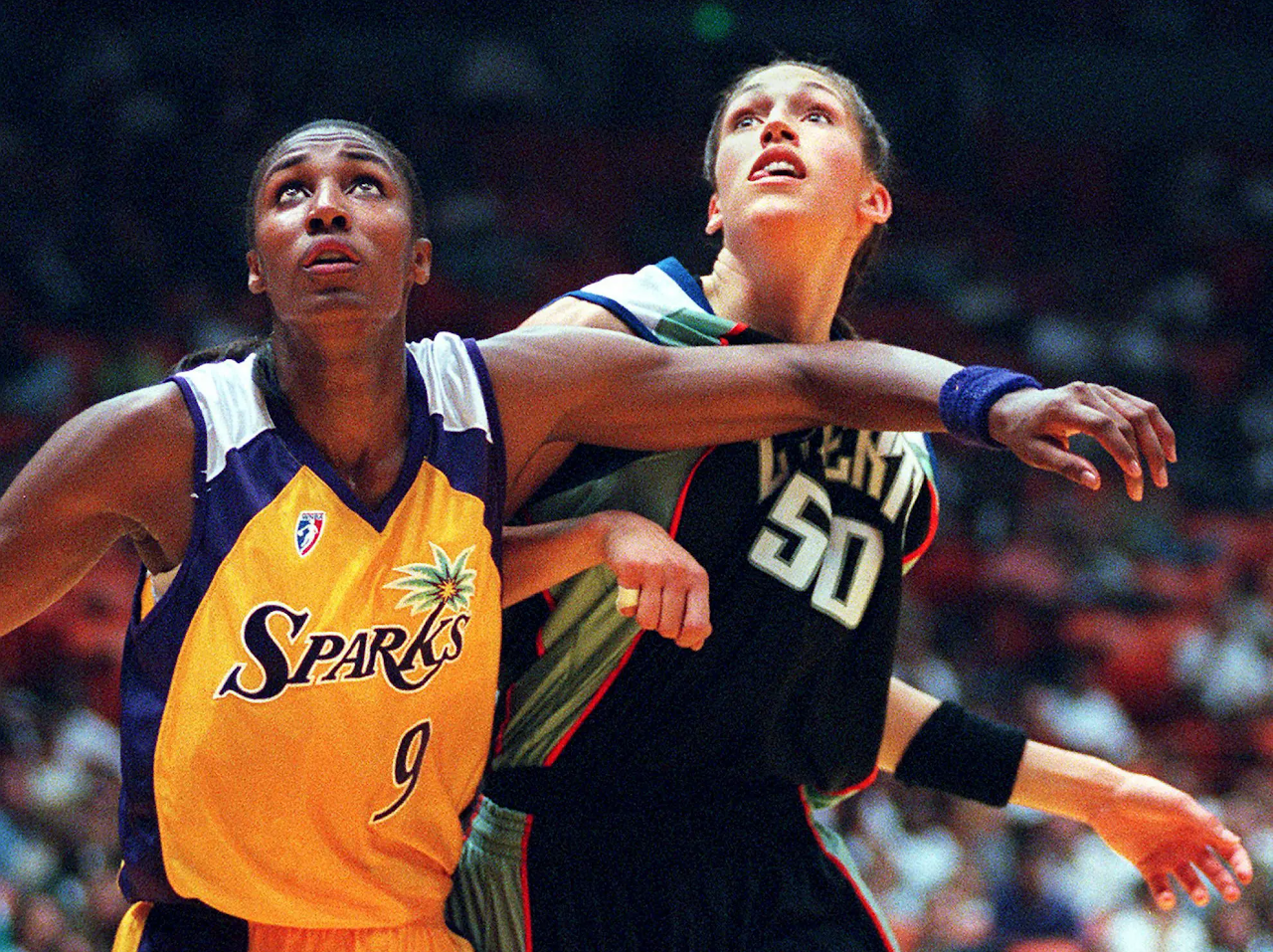
Lisa Leslie and Rebecca Lobo at a game in Inglewood, Calif. in 1997. (Kevork Djansezian // Associated Press)
When the WNBA first tipped off, players' fashion was largely influenced by the desire to be taken seriously in a male-dominated sports world. Baggy shorts and oversized jerseys were an NBA norm, reflecting the time’s emphasis on function over flair.
Players may have felt pressured to downplay their femininity. Early media coverage was prominent because of heavy NBA-funded marketing that focused on performance, stats and attention-grabbers like the Rebecca Lobo versus Lisa Leslie narrative.
The concept of media-fueled competition between women is an ongoing issue in today’s WNBA. Feuds are often fabricated as a profitable marketing tactic, seen in the Caitlin Clark and Angel Reese rivalry. They’re often taken beyond the court, bringing in societal factors like race that do not accurately reflect the players’ opinions.
The 2010s marked a turning point for players’ self-expression. As social media platforms like Instagram and Twitter gave players more control over their image, individual style became a more public statement. Fitted clothing and styled hair started replacing the uniform approach of earlier years.
This evolution paralleled growing conversations about gender, race and LGBTQ+ identities. For many players, fashion has become a form of pride and protest.
Today, WNBA fashion reflects a broader societal shift toward embracing authenticity. Players are no longer forced to choose between athletic credibility and personal expression.
Off the court, this change has opened doors to Fashion Weeks, stylist collaborations and personal brands.
As the league continues to grow — with rising viewership and new teams — WNBA players are changing how female athletes show up in the world. Fashion is no longer an afterthought but a statement of individuality.